Tumblr staff: ten options is enough for polls, right? No one needs more than that on a regular basis. The average tumblr user: Hey guys which element of the periodic table do you think is the most fuckable?
Posting hole
Lol
yeah yeah carbon nanotubes. but what about the copper nanotubes.
I bet you’d need some high quality copper for that huh?
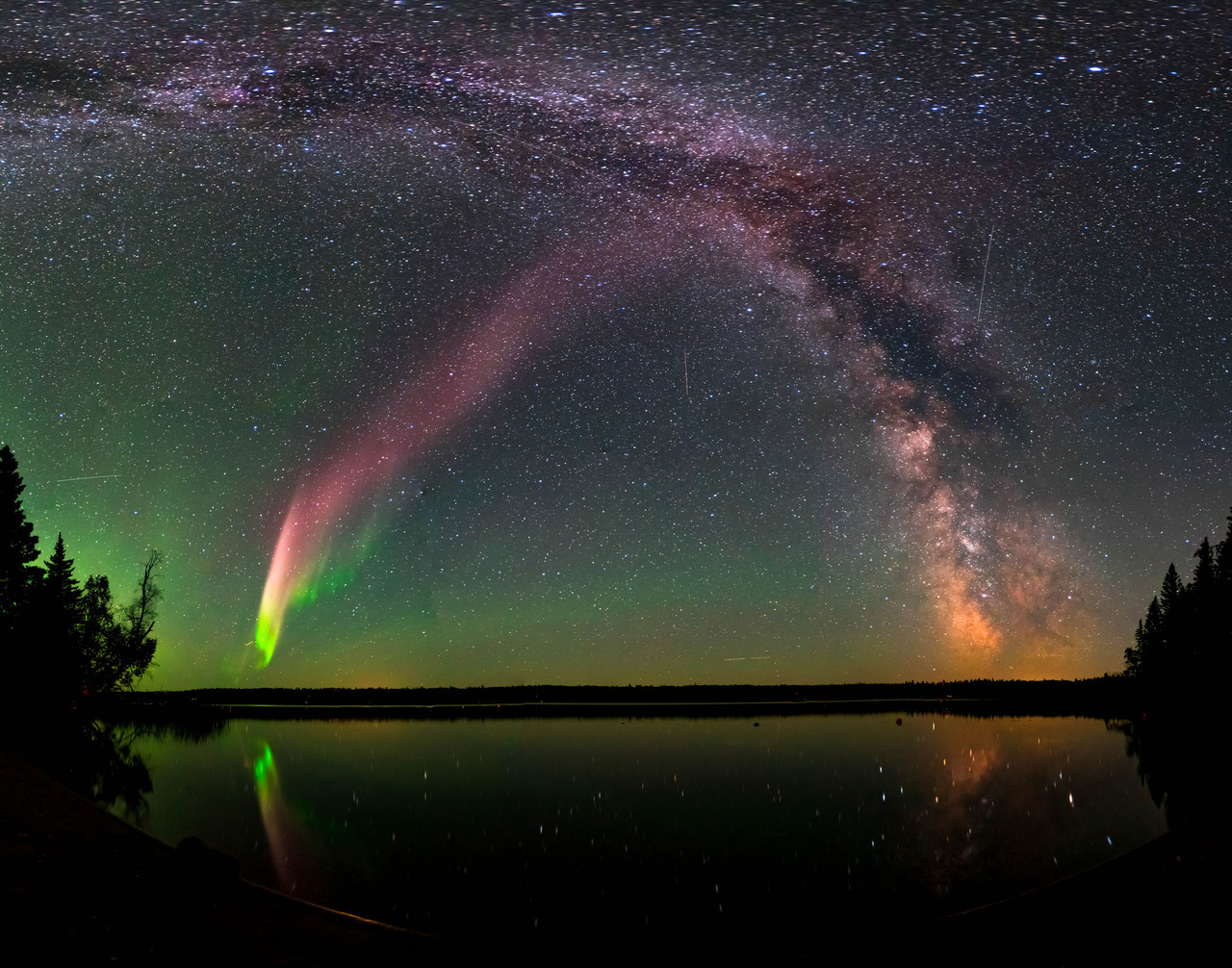
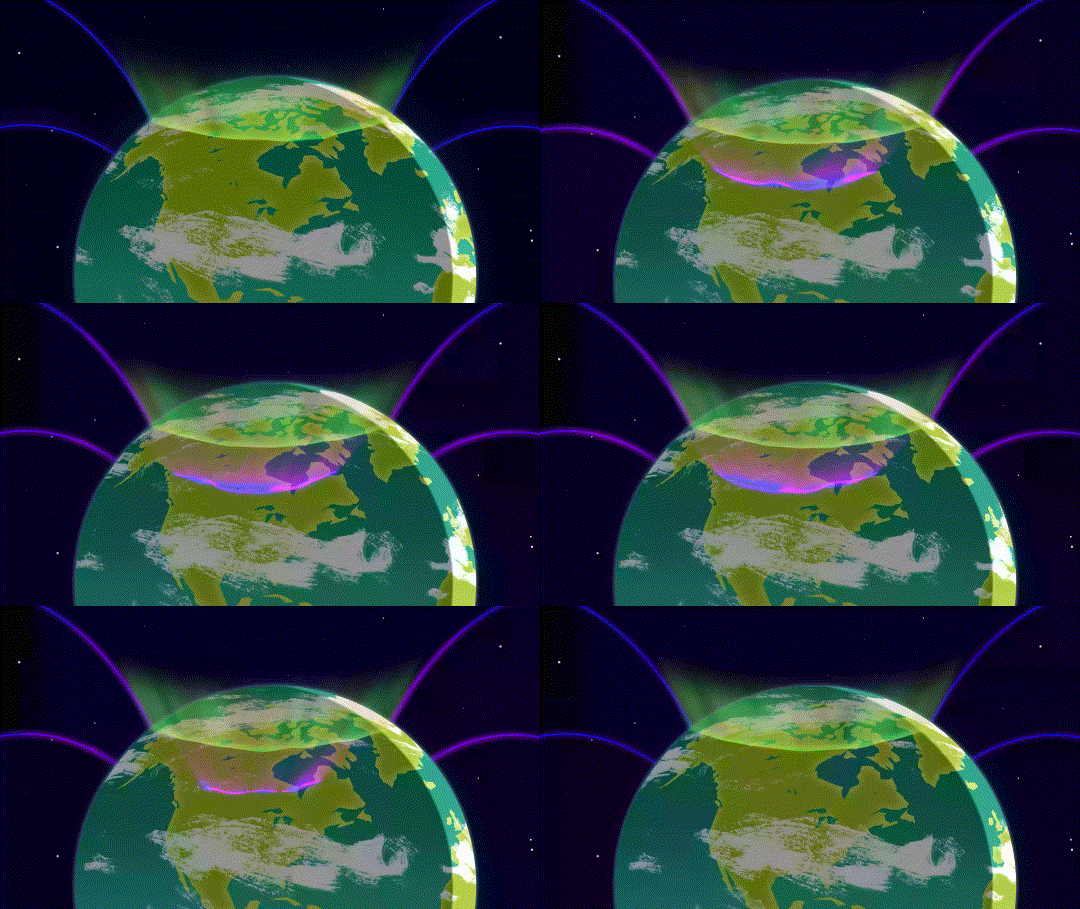
Beautiful auroras are the result of ions in the solar wind exciting atoms in our atmosphere. This example of magnetohydrodynamics is typically only visible in the far northern and southern reaches of the globe. But in recent years, citizen scientists noticed a new aurora outside the polar regions. It looked like a narrow purple streak with occasional fingers of green. It got nicknamed Steve. Recent satellite measurements show that the aurora seems to be a visible emission from a known phenomenon, subauroral ion drift, which features a rapid flow of charged ions. In Steve’s case, this flow moves nearly 6 km/s and is around 6000 degrees Celsius. Scientists have dubbed the aurora S.T.E.V.E., Strong Thermal Emission Velocity Enhancement, to honor the original nickname. Learn more from NASA and Science magazine. (Image credit: K. Trinder; NASA GSFC/CIL/K. Kim, source)
Beautiful auroras are the result of ions in the solar wind exciting atoms in our atmosphere. This example of magnetohydrodynamics is typically only visible in the far northern and southern reaches of the globe. But in recent years, citizen scientists noticed a new aurora outside the polar regions. It looked like a narrow purple streak with occasional fingers of green. It got nicknamed Steve. Recent satellite measurements show that the aurora seems to be a visible emission from a known phenomenon, subauroral ion drift, which features a rapid flow of charged ions. In Steve’s case, this flow moves nearly 6 km/s and is around 6000 degrees Celsius. Scientists have dubbed the aurora S.T.E.V.E., Strong Thermal Emission Velocity Enhancement, to honor the original nickname. Learn more from NASA and Science magazine. (Image credit: K. Trinder; NASA GSFC/CIL/K. Kim, source)
TURNS out two heads really are better than one. Two people have successfully steered a virtual spacecraft by combining the power of their thoughts – and their efforts were far more accurate than one person acting alone. One day groups of people hooked up to brain-computer interfaces (BCIs) might work together to control complex robotic and telepresence systems, maybe even in space.
TURNS out two heads really are better than one. Two people have successfully steered a virtual spacecraft by combining the power of their thoughts – and their efforts were far more accurate than one person acting alone. One day groups of people hooked up to brain-computer interfaces (BCIs) might work together to control complex robotic and telepresence systems, maybe even in space.